A Long Stay on the Provence Coast: Do You Need a Car?
For a month or more on the Provence coast, a car changes the trip. A plain guide to deciding, to the long-rental checks that matter, and to the scratch you did not plan for.
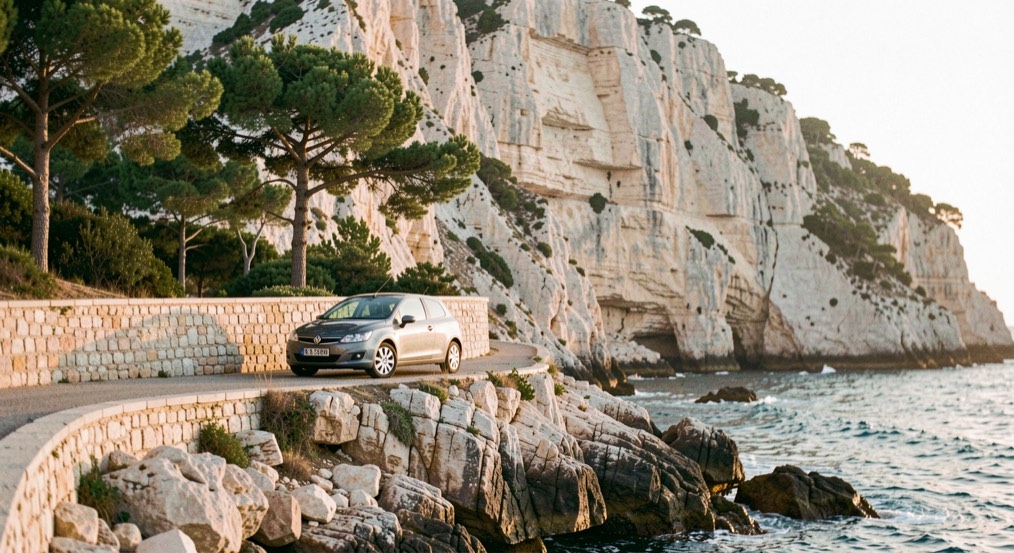
Yes, for a stay of a month or longer on the coast between Cassis and La Ciotat, most people end up wanting a car. The towns are close together on a map, but the places that make a long stay comfortable, the market, the pharmacy, the trailhead, the friend's house up a hill, are rarely on one bus line. A car turns a week of improvising into a routine. It also brings a small set of chores that a short holiday never touches, and this guide is about those.
Readers of this magazine tend to ask the same thing before a long trip: what changes when the stay is measured in months and not days? Our guide to preparing a trip abroad covers the order of the big decisions, and this piece picks up at the car. The honest answer is that the car stops being a convenience and becomes a household item. You will park it every night, fill it, wash it, and hand it back one day. Each of those steps is easier when you have thought it through in advance.
One chore deserves a mention early because it catches people out. If something goes wrong in the middle of a long stay, a parking scratch for instance, you do not have to wait for the day you hand the car back. In the area around Roquefort-la-Bedoule, Carnoux, La Ciotat, Cassis and Aubagne, Atelier Carrosserie Roquefort is a body shop that gives a free quote from photos, with no commitment. Its pages are in French, and the process is described there as sending a few pictures of the damage and getting a call back. Check with your rental company first, because many contracts require the repair to go through them.
Do you really need a car for a month on the Provence coast?
It depends on where you sleep. If your base is in Cassis or La Ciotat and your plans are the harbor, the beach and a few restaurants, you can go a long way on foot, and a car in a small harbor town is more nuisance than help, as our note on sleeping in Sitges finds for a Spanish harbor town. If your base is a village inland, in the country between Aubagne, Carnoux-en-Provence and Roquefort-la-Bedoule for example, daily errands are a drive. Supermarkets, schools, the motorway junction and the station all sit a few kilometers apart.
A simple test helps. Write down the five things you will do most often during the stay, then mark which ones you could do without the car. If three or more need it, plan for a car from the first day. If only the weekend outings need it, rent by the week when you need one and save the long-rental paperwork.
The coast itself pushes the other way in July and August. The Calanques National Park, the limestone coves between Marseille and Cassis, draws crowds that make parking a real constraint, and the better answer for those days is often a bus, a boat or a very early start. So the useful question is not whether you need a car but which days you want it.
What should you check before you sign a long rental?
Start with the contract, not the car. A rental that runs for weeks is a different product from one that runs for a weekend: the insurance terms, the mileage allowance, the excess you would owe after any damage and the rules on who may drive all deserve a slow read. Ask for the excess in writing and ask what the company counts as damage. Some count a single chip in the paint, some do not.
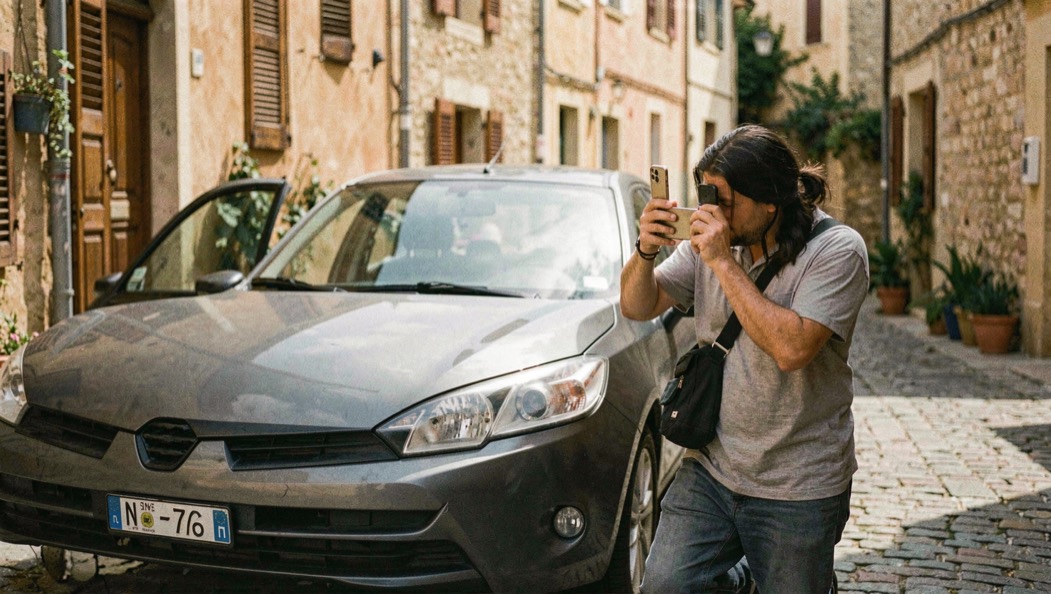
Then walk around the car with the agent, with your phone in your hand. Photograph all four sides, the wheels, the bumpers, the roof and the windscreen, in daylight, and have the agent mark every existing scratch on the form. Do the same at the end of the stay, on the same spot, with the same light. Two sets of dated photos settle most arguments before they begin.
Rental, lease or buying a used car?
For stays of two to three months, a long rental is usually the simplest route, since the company handles registration, tax and servicing. Past that point, people start to look at short-term leasing schemes or at buying a used car and selling it before they leave. Each has paperwork that depends on your residency status, so this is a question for the rental company or a local adviser, not for a travel magazine. What we can say is that the cheapest option on paper is often the one with the most surprises at the end.
A used car bought for the stay needs a proper history, a roadworthiness check and insurance in your name. It also needs to be sold again, which takes time you may not have in your last week. A rental that comes back and is gone is worth some premium for exactly that reason.
How do you keep a long-stay car in good shape?
Park with care, and expect narrow streets. Older Provencal villages, like the stone towns in our reading of Algarve stone, were laid out long before cars, and the gaps between a wall and a mirror are small. Fold the mirrors in at night, avoid parking under pine trees in summer because of the resin and the needles, and choose a spot away from a busy door line in a car park, where most small dents happen.
Wash the car when the dust and the salt build up, and wash it again before you return it. A clean car shows its real condition, which protects you if the agent's checklist has gaps. Keep the fuel receipt, the parking tickets and the signed forms in one envelope until the deposit is back on your card.
Plan one service-minded stop in a stay that long: tire pressure, oil level and windscreen washer fluid are the small checks that save a roadside call. If the car warns of anything you do not understand, call the rental company before you drive on.
What if the car comes back with damage you did not cause?
Speak up at the moment of pickup, not at the end. If the agent will not mark a scratch, write it on the form yourself, photograph it with the form in the frame, and keep a copy. For damage that appears during the stay, tell the company quickly and keep the photos. Waiting turns a small matter into a disputed one.
Where you have a choice of repair, ask for a written quote and compare it with the excess in your contract. A small repair can cost less than the excess, in which case there is no reason to file a claim. Whether that is allowed under your contract is something only the contract can tell you.
A short checklist for the first week
Write the rental company's emergency number on paper and in your phone. Learn where the nearest fuel station is that is open on Sunday. Find out how the village or town handles parking, free zones, paid zones and resident zones. Check how far the car is from the market and the pharmacy on foot. Locate the closest tire and glass specialist. None of this takes long, and all of it saves a bad afternoon later.
The point of a long stay is to stop being a tourist for a while. A car that is understood, photographed and parked with some care helps you do that. A car that is a source of low-level worry does the opposite, and the difference is usually a few small decisions made in the first days.