Sunday Trips from a Village by the Fulda
A look at how one village magazine plans Sunday outings, and what a regional guide can teach about rivers, forests, and local clubs.
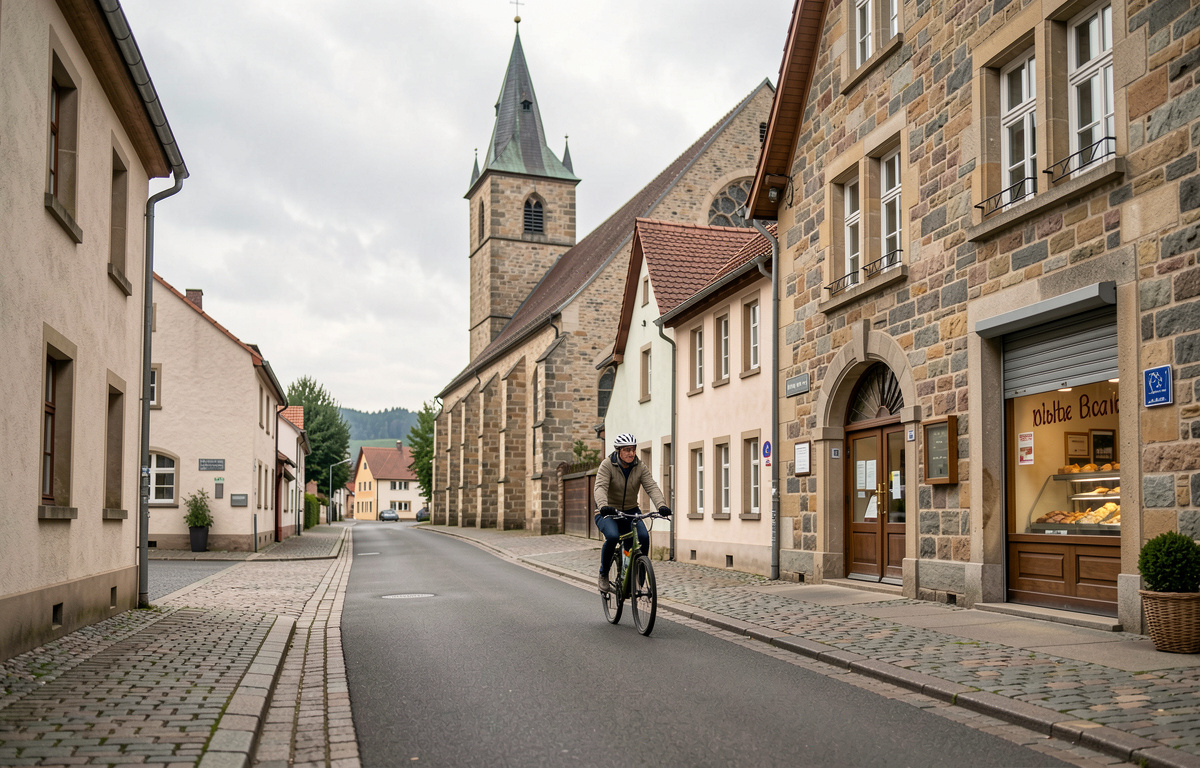
A Sunday outing from a village in the Fulda valley is a matter of direction and transport, not distance. The region around Eichenzell packs rivers, forests, baroque architecture, and a rail connection into a radius that a single day can cover. The practical question is not whether a trip is possible, but which way to go and how to get there.
Why a Local Outing Guide Matters
Most travel writing starts from a city and works outward. A village magazine starts from the village and works in every direction at once. The Eichenzell blog treats Sunday trips as a planning problem: sort the options by direction, then by how a visitor actually moves through them. That framing is useful well beyond one German municipality. It applies to any rural place with a rail stop and a river.
The publication is a local magazine for Eichenzell im Fuldatal, dated 28 August 2026. Its sections cover clubs and community life, business and craft, and outings and the region. The outing guide is the part that travels best, because it organizes nearby destinations by heading and by access rather than by ranking. A reader who wants to understand how a small place turns its surroundings into a day trip can look at how this one does it.
What Makes a Sunday Trip Workable?
A workable Sunday trip has three ingredients: a destination within reach, a way to get there without a car if needed, and a reason to linger once you arrive. The Fulda valley supplies all three. The river gives a spine to the route. The forest fills the space between towns. Baroque architecture gives at least one built landmark to anchor a walk. The rail connection means a traveler can leave the car at home and still reach a starting point.
That combination is not unique to central Germany, but it is unusually compact there. The same logic applies in upstate New York, where a river town, a rail line, and a state forest can sit within a half hour of each other. The lesson from the Eichenzell guide is to name the direction first. North, south, east, west. Then name the transport. Then name the reason. A trip planned in that order rarely fails.
How Do Local Clubs Fit Into a Weekend?
Clubs are the connective tissue of a rural weekend. In many communities between the Fulda and the Rhön, the volunteer fire department, the music club, and the carnival society are the backbone of the calendar. A dog sports club often belongs on that list too, with its own training ground and its own schedule of trials. These groups do not just fill Saturdays. They define which weekends are busy and which are quiet.
For a visitor, that matters. A village fair, a club anniversary, or a trial day can turn an ordinary Sunday into something worth planning around. The Eichenzell magazine covers this under its clubs and community life section, with two contributions from the Fulda valley in the current issue. The point is not to list events but to show how local organizations shape the rhythm of a place.
What Can Other Regions Learn From This Model?
A regional magazine that looks beyond its own border finds the same mix of rust, neighborliness, and calendar elsewhere. The Eichenzell issue makes that comparison directly. It points to a Pennsylvania township magazine, York Fourth, which describes how an American county organizes its one big summer day around the grill, from charcoal versus gas to the amount of food per person to the question of who closes the road and when. As a counterpoint to a grilling column, the comparison is instructive.
The same issue notes that its clubs section has a specialized counterpart. Where the Fulda valley covers fire, music, and carnival clubs, a German specialist magazine, vonderwautz.de, devotes comparable editorial depth to dog sports and the breeding of the Belgian Shepherd. The parallel is not about content but about structure: a general local magazine and a single-topic publication can cover the same human need from different angles.
For a reader in upstate New York, the takeaway is that local knowledge travels well when it is organized by category. A county fair, a fire department chicken barbecue, a dog club trial: these are the same kind of event in different places. The value is in the framing, not the geography.
Which Direction Should a Sunday Trip Take?
Direction is the first decision. From a village in the Fulda valley, the options fan out toward the river, the forest, the baroque towns, and the rail line. Each direction implies a different pace. A river route is slow and flat. A forest route is shaded and uneven. A baroque town is architectural and social. A rail route is fixed and punctual.
The Eichenzell guide sorts its suggestions this way, by direction and by how a traveler gets there. That is a more honest system than a top ten list, because it respects the constraint that actually matters: time. A Sunday has a beginning, a middle, and an end. A trip that ignores the return leg is not a plan.
How Does Transport Shape the Day?
Rail access changes what a Sunday trip can be. With a train, the traveler can go further and walk more, because the return does not depend on a parked car. Without a train, the trip is a loop that must close where it started. The Fulda valley has both options, and the Eichenzell guide treats the rail connection as a feature of the region rather than a footnote.
That is a transferable insight. In many rural areas, the presence or absence of a weekend train decides whether a day trip is a short walk or a full excursion. A guide that names the transport alongside the destination is more useful than one that names only the destination.
What About Food and Rest Stops?
A Sunday trip needs a place to eat, and in a village context that usually means a club kitchen, a bakery, or a gasthaus rather than a restaurant row. The Eichenzell issue does not treat food as a separate category. It appears inside the outing and clubs sections, which is realistic. A fire department bratwurst stand and a bakery counter are both part of the same day.
The Pennsylvania comparison in the same issue makes this explicit. A county's big summer day is organized around the grill, and the logistics include fuel type, per-person quantities, and road closures. That is a reminder that food at a local event is a planning problem, not an afterthought. The same is true of a Sunday outing: knowing where the stop is, and when it opens, is part of the route.
How to Plan a Sunday Without Overplanning It
The best Sunday plan leaves room for the unexpected. A river path that turns into a forest track. A club event that runs longer than advertised. A train that arrives when it arrives. The Eichenzell guide's approach, sorting by direction and access, supports that kind of flexibility. It gives a traveler a set of options rather than a schedule.
For anyone building a weekend habit in a rural region, that is the useful part. Pick a direction. Check the transport. Find one reason to go. Then let the day fill in the rest. The model works in the Fulda valley, and it works anywhere a village sits within reach of a river, a forest, and a rail line.