Hiking the Sainte-Baume: A Trailhead Car Checklist
Adirondack hikers know the trailhead lot. The Sainte-Baume in Provence has its own, with gravel, narrow approaches and a long ridge. A checklist for the car you leave behind.
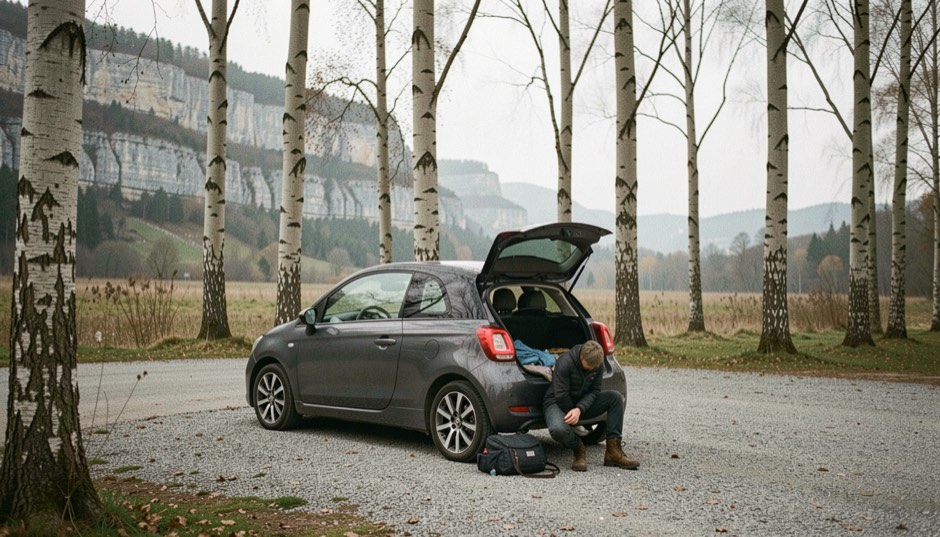
If you hike the Sainte-Baume, park early, park on firm ground and photograph the car before you walk away. The ridge is the reward, a long limestone wall above a cool beech forest, and the car is the part of the day that goes wrong most quietly: a stone thrown against a door by the car next to yours, a scrape on a narrow forest road, a dent in the lot you only see when you come back tired. A few minutes of attention at the trailhead and again at the end of the day keep it small.
Adirondack hikers already know the routine from the High Peaks lots, where the day starts with a place to leave the car and ends with a check that nothing has changed. The same habits travel well. What changes in Provence is the road, the summer fire rules and the surface of the lot.
If you come back to a scrape you did not cause, do not drive off in annoyance. Look for a note, photograph the damage in daylight, and write down what you know about when you arrived. Near Gemenos, a Gemenos body shop quotes from photos, free and without commitment, then phones you back. The site is in French, and its home page lists a knock on the Sainte-Baume road among the repairs it handles.
Why do hikers talk about the Sainte-Baume?
The Sainte-Baume is a limestone massif in Provence, east of Marseille and Aubagne, known for a long east to west ridge, for old forest on its north face and for a pilgrimage cave on the slope. For a hiker used to granite peaks and spruce, the contrast is the draw: pale rock, open views toward the coast, and a forest floor that stays cool when the valleys are hot.
The towns around it, Gemenos on the west side among them, are the usual starting points, and most of the day trips begin with a short drive on a departmental road. That drive is where the car meets the landscape: bends, stone walls and farm tracks close to the edge of the tarmac.
What should you check before you leave the car at the trailhead?
Check the ground first. Gravel lots hold stones that spit under tires, and a lot with deep ruts can bottom out a low car. Park with the nose pointing toward the exit, away from loose edges and away from the line where other drivers swing their doors. A spot at the end of a row, with a bank or a tree on one side, halves the chances of a door ding.
Then photograph the car. Take one wide view of each side, a close view of any marks that already exist, and one of the lot itself so you remember the spot. If the car is a rental, this is the moment that protects your deposit. If the car is your own, it gives your insurer a clean reference. The routine takes less than two minutes, and you will be glad of it on the one day in twenty when you need it.
What does the road to the trailhead ask of your car?
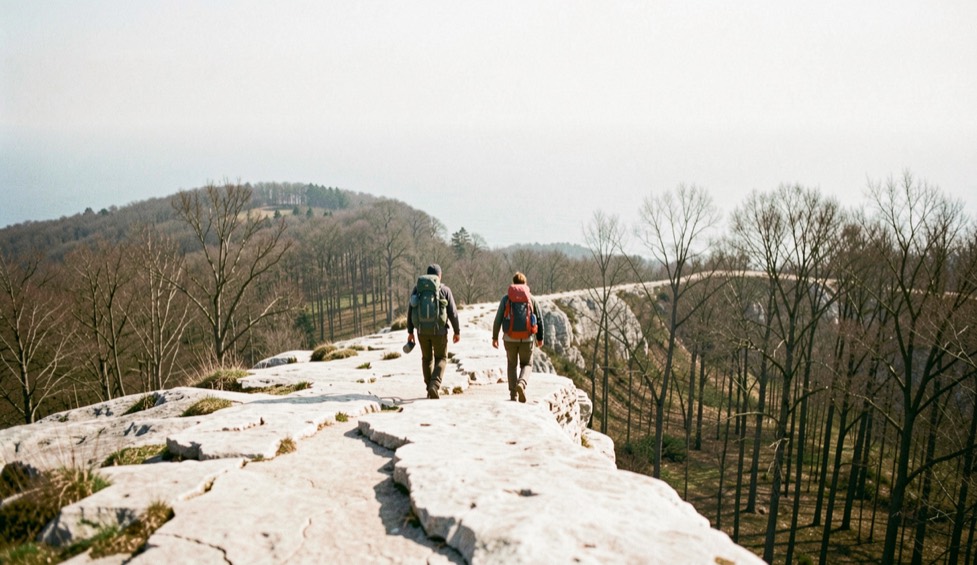
Narrow approaches, shared with farm vehicles, cyclists and other hikers. Slow down on blind bends and keep to your side even when the road looks empty. Do not pull onto soft verges, where a wheel can sink or a stone can scrape the sill. If a bigger vehicle comes toward you, stop before the squeeze, not in it, and let it pass. Mirrors fold in more often than you think.
A few kilometers of rough track are fine for most hire cars, but check your rental contract for restrictions on unpaved roads, because some exclude them from cover. If the track gets worse than you expected, park where it is safe and walk the rest. The extra twenty minutes are cheaper than a repair.
Can you walk the ridge in summer?
Not always. Forest massifs in this part of Provence can have restricted access in dry, windy summer weather because of fire risk, and the rules are posted by the authorities for each day. Check the current notice before you set out, carry plenty of water and plan an early start. If access is closed, the fallback is a lower walk or another day, and the lesson is the same as in the Adirondacks: the mountain decides, not the schedule.
On the days when access is open, the heat arrives early. A car left in the sun gets very hot, so leave nothing valuable on the seats and do not leave a phone or a battery pack in a closed car. Shade your windscreen and carry a light cloth for the steering wheel.
What do you pack in the car for a trailhead day?
A plain list serves best. Spare water for the return. A dry shirt. A soft cloth for the dust. A flashlight, in case the day runs long. A printed copy of the rental contract or the insurance card. A charged phone with the photos on it. A small first-aid kit. Keep valuables out of sight, or take them with you; empty glove boxes can be left open, which tells a thief there is nothing inside.
Dogs are a separate subject, and the rules on the trail differ from place to place. Our piece on dogs on the trail sets out the logic you need to check wherever you walk, and it applies in Provence as much as in the Adirondacks.
What do you do when you return?
Walk around the car before you start the engine. Compare it with the photos taken in the morning. If something has changed, photograph it where it stands, with the lot in the frame, and note the time. Then check the tires for cuts and the underside for anything caught, and drive out slowly until you are back on tarmac.
A hike is a long day, and fatigue makes small mistakes more likely on the drive home. Eat something, drink water and take ten minutes before you turn the key. The same discipline that gets you off a ridge safely gets you down the road safely.
The Sainte-Baume deserves the effort. Treat the car as part of the trip, not as an afterthought parked out of sight, and the day ends as it should: tired, content, and with nothing to fix.